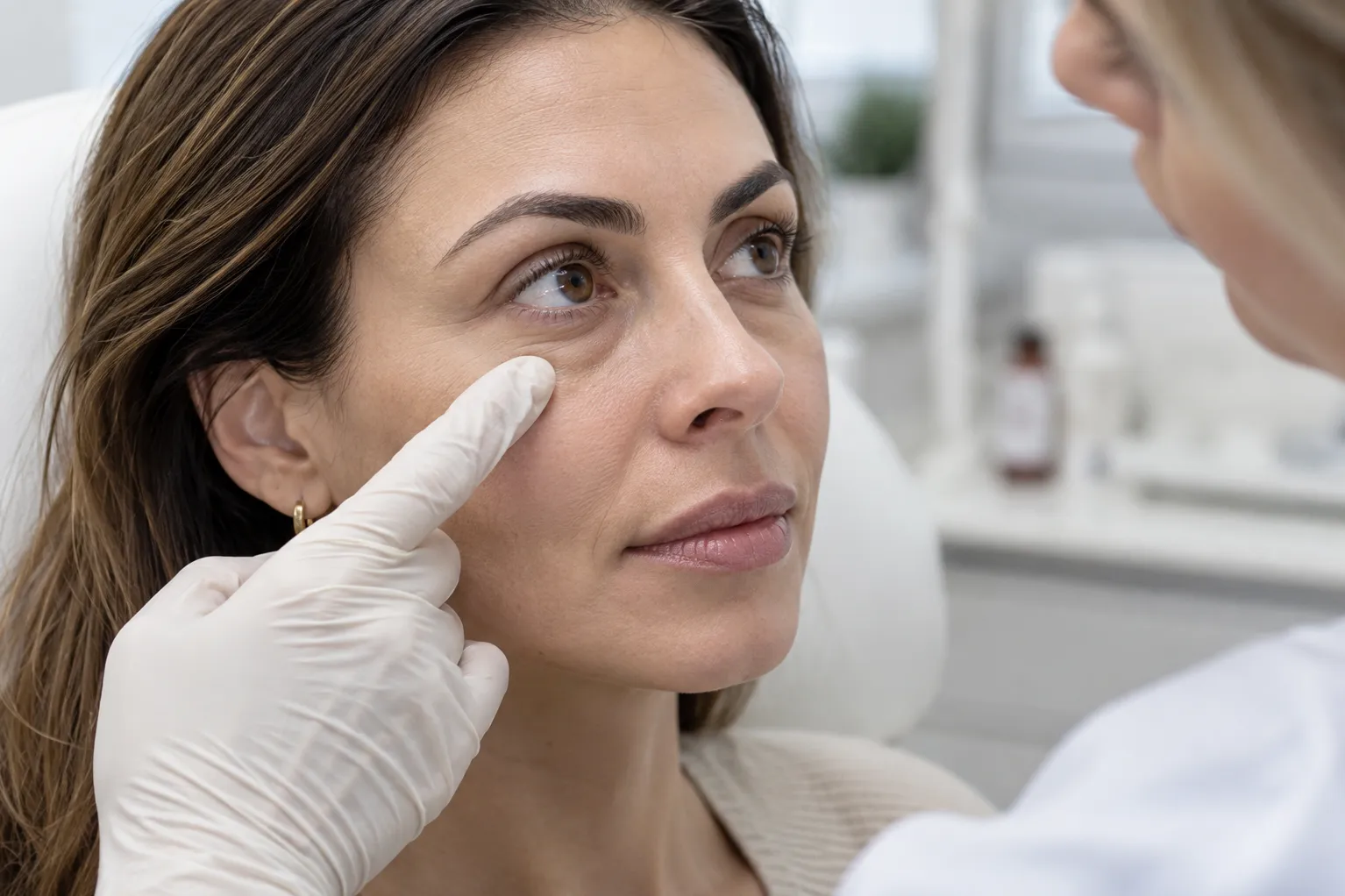
Persistent under-eye shadows can make a person appear tired even after adequate sleep. In some people, the problem is not primarily dark pigmentation but a structural hollow between the lower eyelid and upper cheek. Tear trough correction may be considered for selected patients with this type of under-eye contour concern.
However, not every dark circle or under-eye bag is a tear trough problem.
Identify the Cause Before Choosing Treatment
The under-eye area can look dark or tired for several reasons:
- Natural facial anatomy
- Volume loss
- Pigmentation
- Thin skin and visible underlying vessels
- Lower eyelid bags
- Skin laxity
- Allergic rubbing
- Shadowing caused by facial contours
These problems may occur individually or together.
Filler or another volume-based procedure may improve a hollow, but it cannot be expected to correct significant pigmentation or excess lower-eyelid skin in the same way.
When Might Filler Be Considered?
Hyaluronic acid filler is one technique used for carefully selected tear trough concerns.
The goal is usually to soften the transition between the lower eyelid and cheek rather than completely eliminate every natural contour.
Patient selection is particularly important in this area. Existing puffiness, certain eyelid anatomy, significant skin laxity, or other factors may make filler unsuitable or produce an unsatisfactory result.
Why the Under-Eye Area Requires Particular Care
The tissues around the eyes are delicate and anatomically complex. Swelling can also be more noticeable here than in some other facial areas.
Possible filler-related issues include bruising, swelling, irregularity, asymmetry, prolonged puffiness, and visible product in superficial placement.
Rare but serious vascular complications can occur with facial filler injections. Patients should therefore choose an appropriately qualified medical professional who understands facial anatomy and complication management.
Is Surgery Sometimes More Appropriate?
Yes. If prominent lower-eyelid fat bags or significant excess skin are creating the tired appearance, a surgical eyelid assessment may be more relevant than repeatedly adding filler.
This is an important distinction for patients comparing non-surgical and surgical cosmetic options.
The most appropriate treatment is determined by anatomy, not by a preference to avoid surgery at all costs.
A Useful Pre-Treatment Checklist
Before deciding on tear trough correction, ask:
- Is my main problem hollowing, pigmentation, bags, or loose skin?
- Am I a suitable candidate for injectable treatment?
- What product would be used?
- What temporary swelling should I expect?
- What complications should I know about?
- What alternatives are available?
- Would an eyelid or facial surgical assessment be more appropriate?
Patients should also disclose previous filler treatments, even if they were performed several years earlier.
Consider the Entire Midface
Under-eye appearance is influenced by cheek support and overall facial structure. Treating one isolated line without considering surrounding anatomy can produce an unnatural transition.
For people seeking under-eye aesthetic treatment in Pune, Khatri Clinic - Best Clinic in Camp provides access to dermatology, cosmetology, and plastic surgery perspectives, allowing the underlying cause of the concern to guide treatment selection.
Successful tear trough correction is less about making the under-eye completely flat and more about achieving a balanced transition that suits the rest of the face. Accurate diagnosis is therefore the most important first step.
Keywords